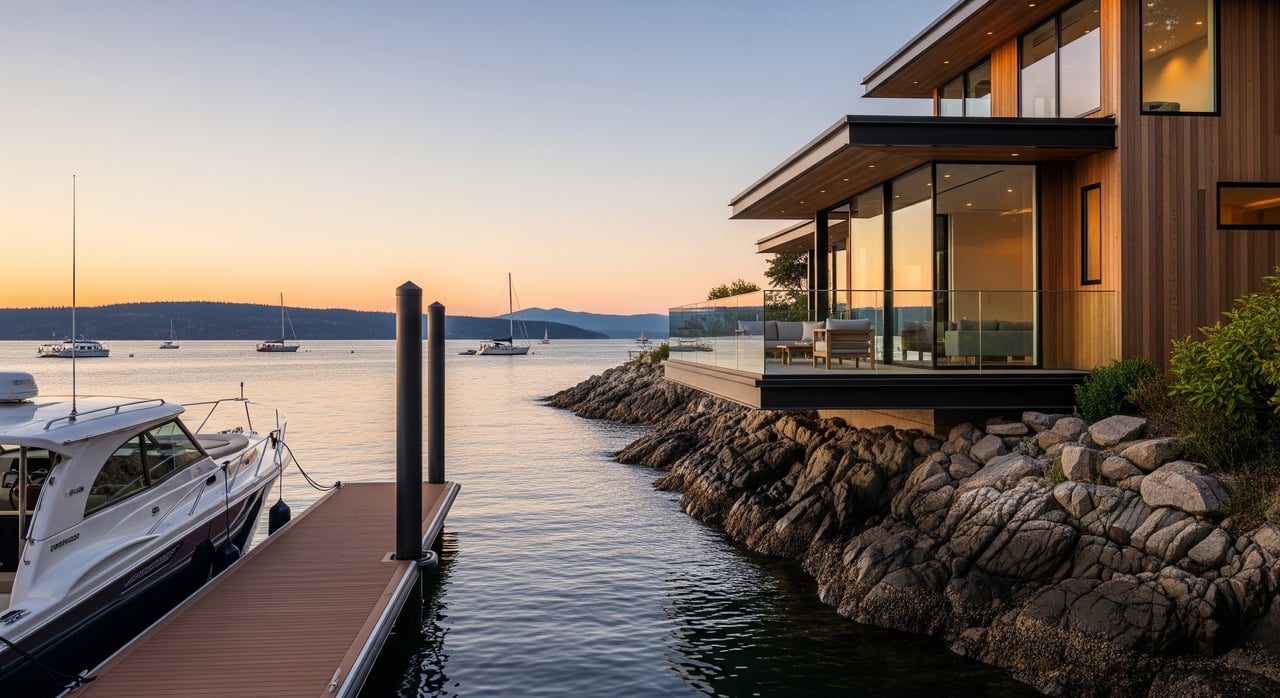
Do you love waking up to the water but wonder if you need a dock or just a great view? In Gig Harbor, waterfront and view homes both deliver the Puget Sound lifestyle, yet the day-to-day realities are very different. From tide rules and moorage to permits, maintenance, and insurance, the details matter. This guide breaks down what changes when you own the shore versus overlooking it, so you can choose with confidence. Let’s dive in.
Waterfront vs. view, defined
Waterfront typically means your property reaches the ordinary high water mark and may include private tidelands or direct shoreline access. You can step from your land to the beach or dock. View homes sit upland and overlook Gig Harbor or Puget Sound without private shoreline rights. You enjoy the scenery, and access the water through public beaches, marinas, or community facilities.
In practice, the label on a listing is not enough. Always verify how far your ownership extends and whether any docks, bulkheads, or moorage are permitted. Tideland ownership in Washington varies by property, and some shorelines include public access easements.
Ownership lines that shape use
The ordinary high water mark is the critical boundary that often separates private uplands from state-managed aquatic lands. In Washington, many tidelands are owned and administered by the Department of Natural Resources, so upland owners may need leases or authorizations for docks or moorage. You can learn more about aquatic lands through the Washington State Department of Natural Resources.
Local shoreline policies flow from the Washington State Shoreline Management Act and each jurisdiction’s Shoreline Master Program. The Washington State Department of Ecology provides guidance on how SMPs are applied across cities and counties. Within city limits, the City of Gig Harbor administers shoreline permits and zoning for docks, bulkheads, and shoreline modifications. In unincorporated areas nearby, Pierce County is your permitting authority for shoreline work and critical areas.
What to verify before you fall in love with a property:
- Where the ordinary high water mark lies on the parcel, ideally with a survey.
- Whether the deed includes tidelands and if any public or utility easements exist.
- If a dock or bulkhead is present, confirm recorded permits and approvals.
Boating and moorage essentials
Your boating plans should guide your property type. Here are the common options Gig Harbor buyers consider:
- Private dock at the property. Maximum convenience and strong lifestyle value for active boaters, but it brings the most permitting, inspection, and maintenance.
- Private moorage on tidelands. This can require specific tideland ownership or a state authorization through the Department of Natural Resources.
- Shared docks or marina slips. Lower personal maintenance, but you may have waitlists, rules, and fees. Public launch ramps and marinas are available but not exclusive.
- Buoy or anchorage. Often requires permits and must meet navigation and safety rules.
Practical checks for Gig Harbor waters:
- Tidal range and depth at low tide. Puget Sound is tidal, so confirm your clearance and depth using NOAA tides and currents before relying on a dock or slip.
- Overhead clearance for masts, swing room for moorings, and exposure to wake.
- Utilities at the dock, including electric, water, and access to pump-out services.
Private, permitted moorage can significantly increase a property’s appeal to boaters. Unpermitted or substandard moorage can reduce financing options and complicate resale.
Maintenance, hazards, and insurance
Waterfront ownership often comes with higher ongoing costs than a comparable view home. Expect recurring dock, float, and piling upkeep, plus periodic hardware and fastener replacement. Bulkheads and shoreline armoring need inspections and, at times, repair or replacement. Where possible, soft-shore solutions may be preferred or required by regulators to protect habitat.
Storms, wind, and seasonal high tides can create unplanned repairs. Steep upland slopes in parts of Gig Harbor also require vegetation management and erosion control to maintain stability. If the home uses a septic system, location near the shoreline can add complexity to maintenance and upgrades.
Insurance is another key difference:
- Flood insurance. Check FEMA Flood Insurance Rate Maps to understand your risk and whether coverage may be required by a lender. Premiums depend on elevation, flood zone, and policy specifics.
- Exposure. Salt spray, wind, and storms can affect home insurance costs and may require special endorsements.
- Lender scrutiny. Some lenders limit loans on properties with unpermitted docks or uncertain access. Make sure improvements are permitted and documented before you write an offer.
Permits and environmental rules
Shoreline projects in Gig Harbor and surrounding Pierce County are regulated by the Washington State Shoreline Management Act, implemented locally through Shoreline Master Programs. The Department of Ecology provides statewide guidance on how SMPs work. For in-water structures or work that touches state-owned tidelands, authorizations or leases through the Department of Natural Resources may be required. Federal permits from the U.S. Army Corps of Engineers can also apply to certain in-water work.
What to expect in the process:
- Start with a pre-application conversation with the City of Gig Harbor or Pierce County planning staff. Early guidance can save time.
- Minor repairs might qualify for shoreline exemptions, while new structures usually require full permits and multi-agency coordination.
- Environmental protections for salmon and forage fish can limit when work is allowed in the water. Timing windows and mitigation may apply.
Permitting takes planning and patience. Build timelines that account for agency review and seasonal construction windows.
Which home fits your lifestyle
Use your day-to-day lifestyle and risk tolerance to guide the choice.
- Archetype A: The active boater. You want private, permitted moorage at your doorstep and plan to use your boat frequently. Convenience is paramount, and you accept maintenance and permitting complexity.
- Archetype B: The view-first lifestyle. You value sunrise and sunset vistas, lower maintenance, and predictable costs. You are happy using public beaches or marinas for occasional water access.
- Archetype C: The investor or resale-focused buyer. You want broad market appeal and simpler ownership. You weigh the premium for waterfront against ongoing costs and permit risk.
Quick comparison checklist
Choose a waterfront home if you want:
- Direct, private access to the shore.
- Potential for private dock or permitted moorage.
- A lifestyle centered on boating and the water.
- Willingness to manage permits, inspections, and higher maintenance.
Choose a view home if you want:
- Panoramic scenery with lower complexity and cost.
- Fewer permitting issues and simpler insurance.
- Broad resale appeal to a wider buyer pool.
- Access to marinas and public beaches instead of a private dock.
How to evaluate a property
Use this field checklist when touring Gig Harbor homes:
- Confirm whether the property is legal waterfront or view-only using title, survey, and the ordinary high water mark.
- For waterfront, collect permits or authorizations for docks, bulkheads, and moorage, including any DNR documentation.
- Check FEMA flood zone and request an elevation certificate if available.
- If you plan to use a boat, assess moorage options, slip dimensions, depth at low tide, and community rules.
- Hire a marine surveyor or qualified inspector for docks and bulkheads.
- Ask for maintenance history, including dates, contractors, and warranties for shoreline work.
- Verify utilities at the dock, including electric, water, and pump-out access.
- Confirm septic or sewer service, drainfield locations, and any known issues.
- Review DNR records for tideland ownership, leases, or encumbrances affecting moorage.
- Obtain homeowner and flood insurance quotes before final offer.
- Discuss future changes with City of Gig Harbor or Pierce County planning staff to gauge permitability.
- Check NOAA tide tables and seasonal conditions for your boating plans.
Resale and transaction pitfalls
Waterfront can command a premium and sell quickly in strong markets, yet it is more price sensitive to condition and permit status. View homes often appeal to a broader pool of buyers with lower ownership costs. For both types, watch for the big deal-killers:
- Unpermitted docks or aging bulkheads that trigger expensive fixes or retroactive permits.
- Tideland ownership disputes or unclear boundaries that delay closing.
- Insurance surprises related to flood zones and coastal exposure.
- Maintenance backlogs on docks, seawalls, roofs, or critical systems.
Document permits, verify boundaries, and budget for shoreline upkeep to protect value and avoid surprises.
Your next step
If you are leaning waterfront, view, or still undecided, a focused plan will save you time and stress. Start by verifying title and OHWM, getting early insurance quotes, and speaking with local planning staff about your intended use. Then tour a mix of properties to test assumptions about access, tides, and upkeep.
Ready to compare specific Gig Harbor homes side by side? Connect with Jo Jensen to map options, tap vetted shoreline and marine experts, and choose the property that fits your life today and your plans tomorrow.
FAQs
What does “owning the beach” mean in Gig Harbor?
- Ownership depends on where the ordinary high water mark lies and whether your deed includes tidelands. Many tidelands are state-managed through the Washington State Department of Natural Resources, so verify with title, survey, and DNR records.
Can I add or replace a dock on a Gig Harbor home?
- Possibly. Most in-water work requires local shoreline permits, and work on state-owned tidelands may need DNR authorization. Federal permits can also apply. Start with the City of Gig Harbor or Pierce County planning staff to understand feasibility and timing.
How do tides affect my moorage in Puget Sound?
- Tides change water depth and clearance, which affects docking, swing room, and access. Always confirm depth and timing using NOAA tides and currents before relying on a slip, dock, or buoy.
Will I need flood insurance for a waterfront home?
- It depends on your FEMA flood zone and elevation. Many waterfront properties sit in higher-risk zones, and lenders may require coverage. Check FEMA Flood Insurance Rate Maps and obtain quotes early.
Is resale typically easier for waterfront or view homes in Gig Harbor?
- It depends on market cycle and condition. Waterfront can be highly desirable to boaters but more niche and cost intensive. View homes usually attract a wider buyer pool with simpler ownership and lower ongoing costs.
Links referenced above:
- Washington State Department of Ecology guidance on shoreline programs: Department of Ecology
- Washington State Department of Natural Resources aquatic lands and tidelands: WA DNR
- City of Gig Harbor planning and shoreline permits: City of Gig Harbor
- Pierce County permitting and critical areas: Pierce County
- NOAA tide predictions and currents: NOAA Tides and Currents
- FEMA Flood Insurance Rate Maps: FEMA Map Service Center